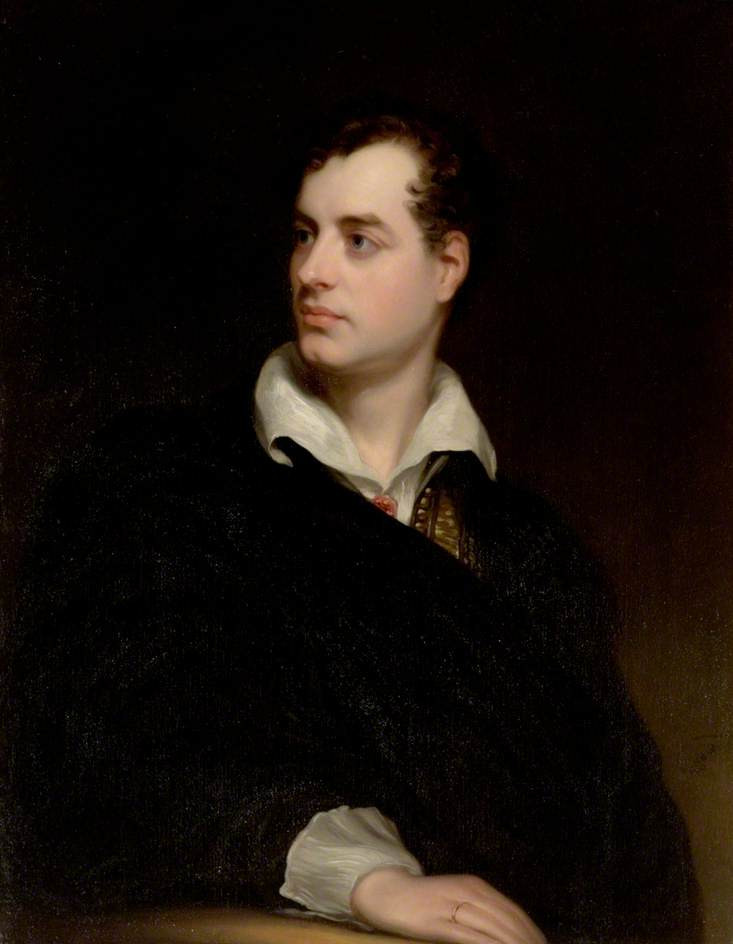
Before there were verified accounts, sponsored posts, and celebrities launching their own tequila brands, there was a man who wrote the playbook.
He was an aristocrat with a limp, a poet with rock-star charisma, and a rebel who made brooding an art form. He didn’t just live a life; he curated an existence, turning his personal brand of smouldering disdain into the hottest commodity in England.
Meet George Gordon, Lord Byron (1788–1824): the first modern celebrity, and Patient Zero of the fame-obsessed culture we now call home.
The Invention of “Going Viral” Byron wasn’t just a poet; he was a phenomenon. After publishing his travelogue-poem Childe Harold’s Pilgrimage, he famously declared, “I awoke one morning and found myself famous.”
This wasn’t an exaggeration. It was the 19th-century equivalent of breaking the internet. Suddenly, everyone wanted a piece of him. His moody, handsome, and tormented persona—the “Byronic Hero”—wasn’t just a character in his poems; it was his greatest creation. He was a walking, talking archetype of dark allure, and the public consumed it with the same ravenous hunger we now reserve for reality TV scandals. He perfected the art of being famous for being himself—a self that was, of course, meticulously crafted for public consumption.
The Maiden Speech: Defending the Saboteurs. But here is where Byron gets more interesting than your average TikTok star. He decided to weaponise his fame.
In 1812, he took his seat in the House of Lords. For his maiden speech, he ignored all the respectable topics of the day. Instead, he stood up and defended the Luddites—the unemployed factory workers who were smashing the new machines that had stolen their jobs.
To the establishment, these men were terrorists and wreckers of progress. To Byron, they were victims of the “dark Satanic mills” his contemporary Blake was warning about. While his fellow lords clutched their pearls, Byron delivered a blistering takedown of industrial capitalism, dripping with sarcasm and genuine fury.
It was a career-defining move. In an age of conformity, he used his massive platform not for a safe, pre-approved charity, but to champion saboteurs. It was the ultimate act of Romantic defiance.
The Cancellation of 1816. Of course, a celebrity brand is built as much on scandal as on substance, and Byron’s was pure dynamite.
He cultivated a whirlwind of debt, drama, and duels. His affair with Lady Caroline Lamb gave us the immortal description: “Mad, bad, and dangerous to know.” But it was the persistent rumours of an incestuous relationship with his half-sister that finally tipped the scales.
The public that had adored him turned on him with vicious speed. In 1816, facing social ruin, Byron fled England, never to return. He was, in effect, the first celebrity to be spectacularly “cancelled” by the very mob he had courted.
The Content Tour, but exile wasn’t a quiet retreat. It was a chaotic European tour, with Italy as the main stage.
In Venice, he rented a crumbling palazzo which he promptly filled with a bizarre menagerie: monkeys, a fox, a wolf, and a revolving door of mistresses. Yet, amidst the debauchery, he wrote his hilarious masterpiece, Don Juan. This was his revenge: aserialisedd takedown of the hypocrisy and sexual repression of the society that had rejected him. He proved that for an artist of his calibre, getting cancelled wasn’t an ending—it was a glorious, continent-spanning content opportunity.
The Final Act: Byron’s finale was his most profound pivot. After years of excess, he sought a cause worthy of his spirit and found it in the Greek War of Independence.
This was no duel over a lover; this was a fight for a nation’s freedom. He poured his immense fortune into the Greek cause, commissioned a fleet, and sailed to join the fight against the Ottoman Empire. Lord Byron, the brooding celebrity, became a General.
He died of a fever in Missolonghi before seeing combat, instantly becoming a martyr and national hero of Greece. It was a strange, noble end. He proved that behind the carefully constructed fame, there was a fighter who believed some things were worth dying for. He was the ultimate paradox: a creature of shallow fame who died for a profound ideal.
 Midnight Moon's Library